





How Edie Liberty Rose Created a Vintage Fashion Safe Haven
We spoke to model, stylist and founder of Koroma Archive to find out more about London’s newest vintage store.
Stylist to the stars, model and all-round it-girl Edie Liberty Rose is on a mission to make vintage fashion less intimidating. That’s why she created Koroma Archive, a physical store in West London where fashion fans can host events, rent or buy designer vintage and above all else, have a truly “unintimidating” fashion experience.
The archive itself is the result of years of collecting vintage pieces — with a little help from her mom’s wardrobe, of course — plus sourcing for her clients like Sienna Spiro, and features everything from vintage Vivienne Westwood to archive JPG.
We stopped by the store to find out more about how Koroma came about, Rose’s process behind sourcing vintage gems and her plans for the space’s future.
Read on for the full interview and head to the Koroma Archive website for a closer look at its current offering.
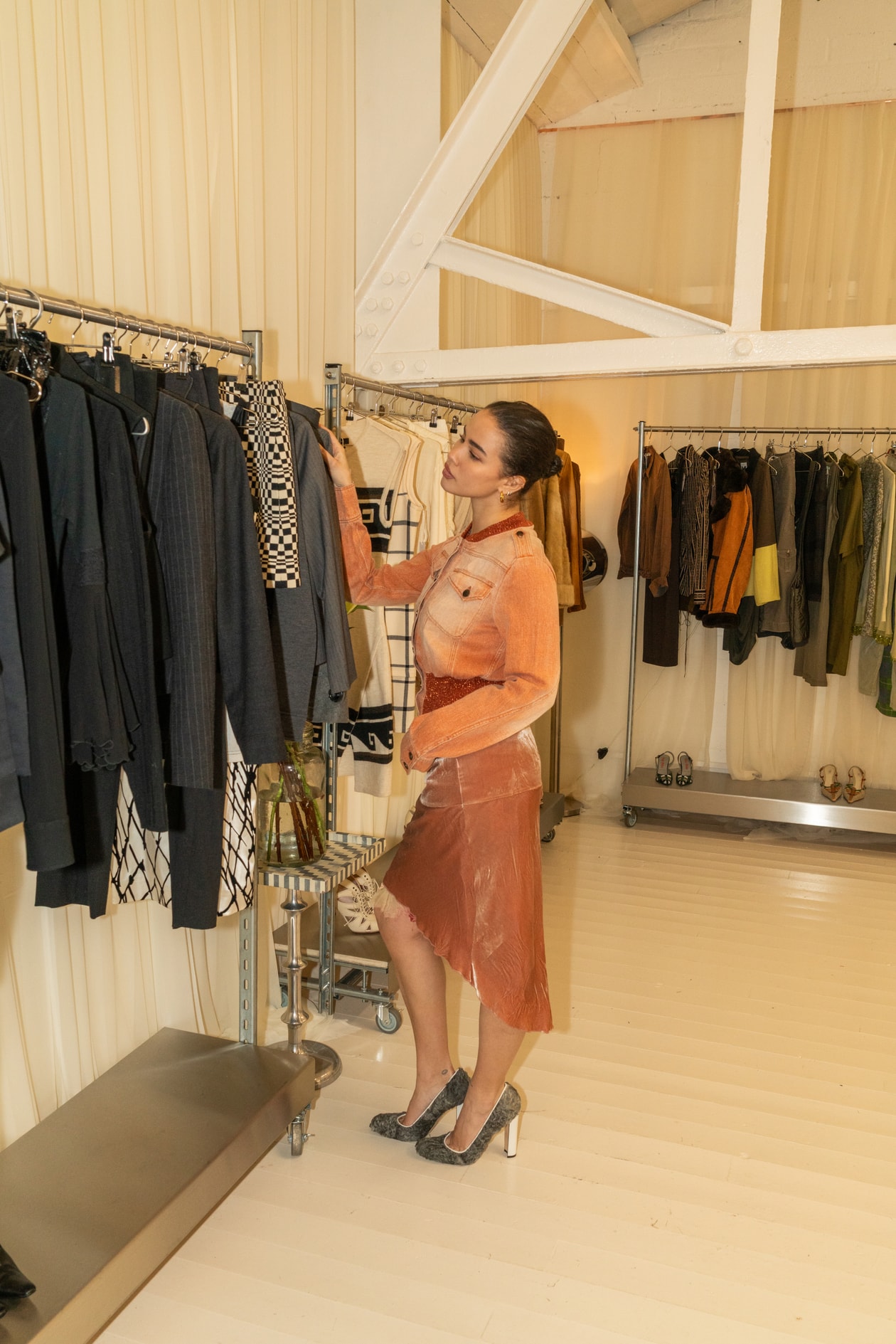
Tell me a bit about how Koroma Archive came about. What was the starting point for you?
Well, the starting point was my shopping addiction, which I feel like is probably a common place to start when you do something like this. Then I started styling as well, and I was doing it all out of my house. I was just building the most insane vintage collection, and it was all sitting in boxes. My boyfriend, who pretty much lives with me, was just like, “You can’t keep doing this, you’ve got to do something about it,” and found the space.
Amazing. What is the story behind the name?
The name is my grandma’s maiden name. She’s someone who has supported me so much in my life, and I just wanted to bring her into it. She’s from Sierra Leone, and she refuses to leave her little village, so this is my way of bringing her into it with me.
This is probably the bit that I’m most intrigued by… How do you build up an archive like this? What is your sourcing process and how do you go about curating things? Where do you even begin?
I basically spend my entire life bidding on eBay and looking at auction sites. My eyes don’t spend time on social media. eBay and Vestiaire Collective are my social media. I spend hours scrolling. But then also, whenever I travel anywhere, going to the markets, and I think places in Italy are the best for it, I find to source because all these incredible older women have no idea what they’re getting rid of. They just send it to the local market, and you end up finding some really great things.
That is literally my dream to be doing that all the time. But does that mean that you’re always on? When you go on holiday, you can’t not?
Every time we travel for work, we end up spending one full day just vintage shopping. If we have any free time, we’re doing nothing but being in the shops and the markets. But I think I would have done it even if I didn’t have an excuse, and now I’ve got an excuse and I can be like, “No, I’m being really productive.” But no, I would have done it anyway.
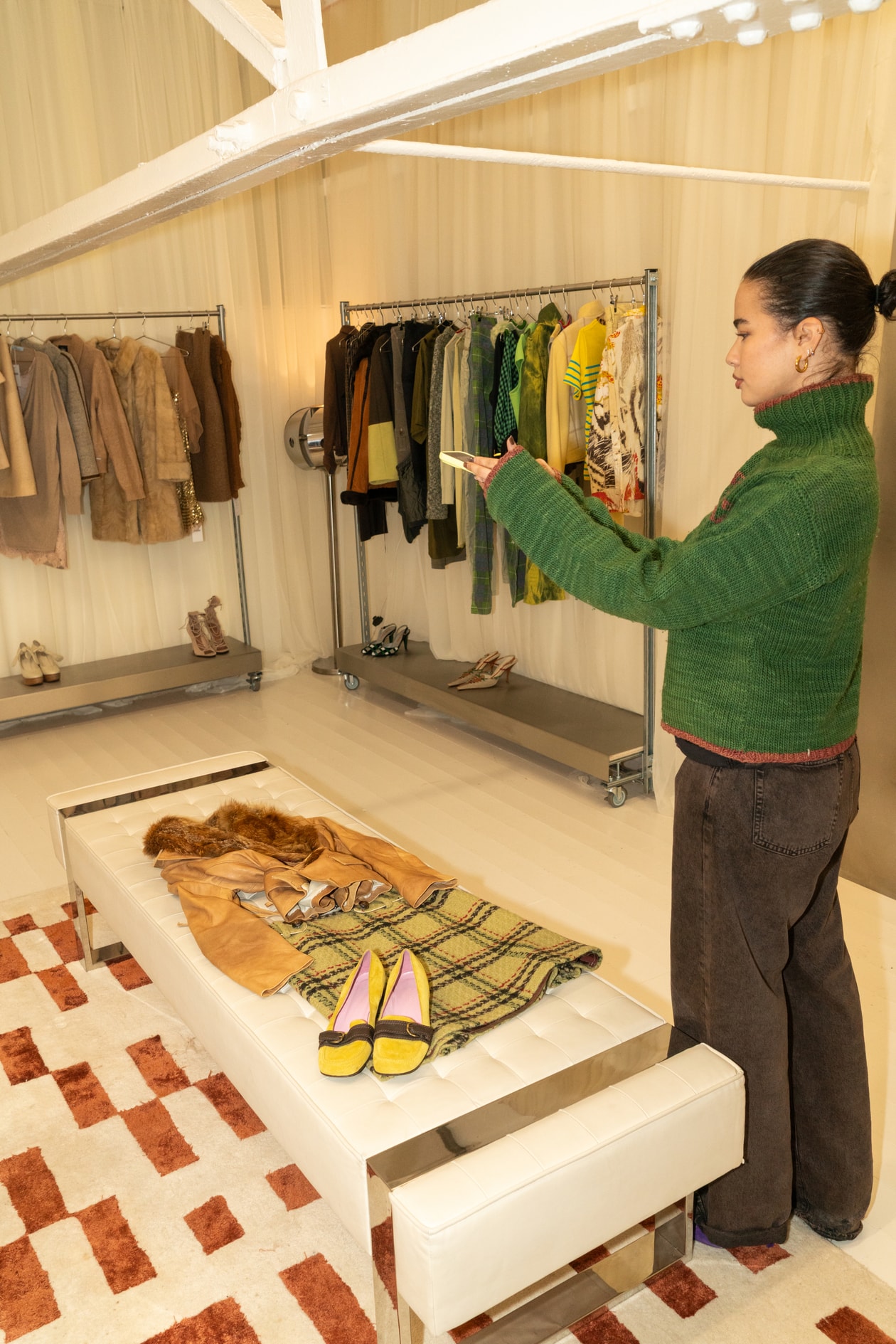
That’s so fair. When you’re doing a lot of the sourcing in person, how do you authenticate on the spot in your head? Are there things that you look out for?
From looking at vintage clothing and designer clothing for so long, I think there are definitely things I can tell when things aren’t real. But then if there’s ever a moment where I’m not sure, then obviously you can get them authenticated. And then a lot of the sites, like eBay or Vestiaire, when you’re buying, you can get them authenticated through them as well.
What are some of the things that you look for that instantly tell you, “I already know this is not real”?
Usually, the lining inside of things, or in a handbag, it’s the zipper. The lining or the patches on trousers, any of the labels. I think is where you can really see the difference. It’s mostly the patches or the labels; sometimes, the inner labels are done in a really crazy way.
In terms of the sourcing process, obviously, that’s something you’ve just been doing because you’ve loved it. How has that changed now with Koroma? Is it something you have to actively go out and do? Do you have a weekly market that you always visit?
The process has changed because I’m not just shopping for myself anymore. As much as a lot of the time I’m like, “Oh my god,” the process is pretty much the same because I do spend this much time looking anyway. It’s just become, not necessarily more stressful, but you have to think, “Would somebody actually buy this, or am I just going insane?”
And then you’ve also got to shop for things that aren’t necessarily your natural style. So even though I want it curated by me, I also want to know that anyone could come in here and find something that they would want to wear, whereas I think my style’s maybe a little bit out there for some people. And also sizing, I’m not just buying my own sizes. I want to be able to wear the things in here, but I also need to make sure that everyone else wants to wear them, too.
What is your favorite or what are some of the favorite things that you’ve sourced so far since you started the archive?
I’m going to say—a lot of these Manolos. I am a sucker for anything that has fur or hair, like these. Sadly, not my size, they’re a 41. I would say the Vivienne Westwood corseted runway dress. I haven’t seen that before, I’m obsessed with it. It’s one of those things where I really want to wear it before anyone buys it, but I don’t go anywhere. And then there’s a Mugler dress that’s really cute. Oh, I like the velvet JPG [Jean Paul Gaultier] two-piece. And a little Fendi scarf—pretty much everything.
View this post on Instagram
We briefly touched on it earlier, but in terms of renting versus buying, how did you decide that both of those things were going to be something that you could do here, and then how do you determine which is for which?
Everything is available to be rented. Anyone can rent any of the pieces, it’s just 20% of the price to rent it for the week. And then there’s obviously the archive pieces where I’m like, “I actually haven’t got it in me to part with that,” so people can’t buy it.
Because I started styling myself, I realized how big that market is. In terms of sustainability—and also because of the internet, it’s such a sad thing that people don’t tend to re-wear things—if you have a piece, something really beautiful, you wear it to a wedding and take pictures in it, or you wear it to an event and take pictures in it, people don’t tend to wear them again.
And then you’ve spent hundreds of pounds on an outfit you’re never going to wear. So I think the renting process, there’s such a market for it, and it’s not just for photo shoots or celebrity stylists. You can also come and rent things for fashion weeks and things like that.
Do you feel like it’s also kind of helped you to force yourself to re-wear more of your own wardrobe? Working in this industry, you post things and then it’s like, “Okay, I can re-wear it, but I might want to wear it a different way or wait a bit of time.”
I’m trying to train myself out of that mindset, and I think in doing that, all of my fun vintage pieces have come into the shop, and my own wardrobe has slowly become more and more plain. But I think a capsule wardrobe is kind of where I’m at, and then you can re-wear things. Like a good vintage structured piece, you can re-wear it in a million different ways.
Yeah, in general, it feels like more and more people are gravitating towards vintage because of things like TikTok trends—polka dots and all of that stuff, where you just don’t want to wear the same things as everybody else?
And also, even if you are subconsciously reading into these TikTok trends, you can find them in a vintage shop or secondhand. If you want to wear a polka dot mini skirt and find a vintage Versace one, you know that more thought and time have gone into that piece. There’s more of a story to it, and you can resell a vintage piece, whereas you’re not going to be able to resell a Zara polka dot mini skirt.
View this post on Instagram
To be fair, I do see a lot of Zara on Vinted…
I don’t mind Zara on Vinted, actually, but there is a lot of it. People also say things like “Archive River Island,” and it’s like, girl, what do you mean?
How do you define vintage?
I think it’s only 20 years. So 2006 is now vintage, which is crazy. I said that to my mom the other day because the reason I got into vintage clothing is that my mom has always had the most incredible collection. I wore her Tom Ford Gucci dress to my school prom. Most of my wardrobe, whenever I get compliments, I’m like, “Yeah, it was my mom’s.”
As you should!
I wore her Fall 2000 dress to the Fashion Awards this year. I’ve even been styling Sienna in things that my mom already had.
She sounds like a very generous woman…
Half the time, she doesn’t know! She’ll send me a text, being like, “Is this how I’m going to find out?”
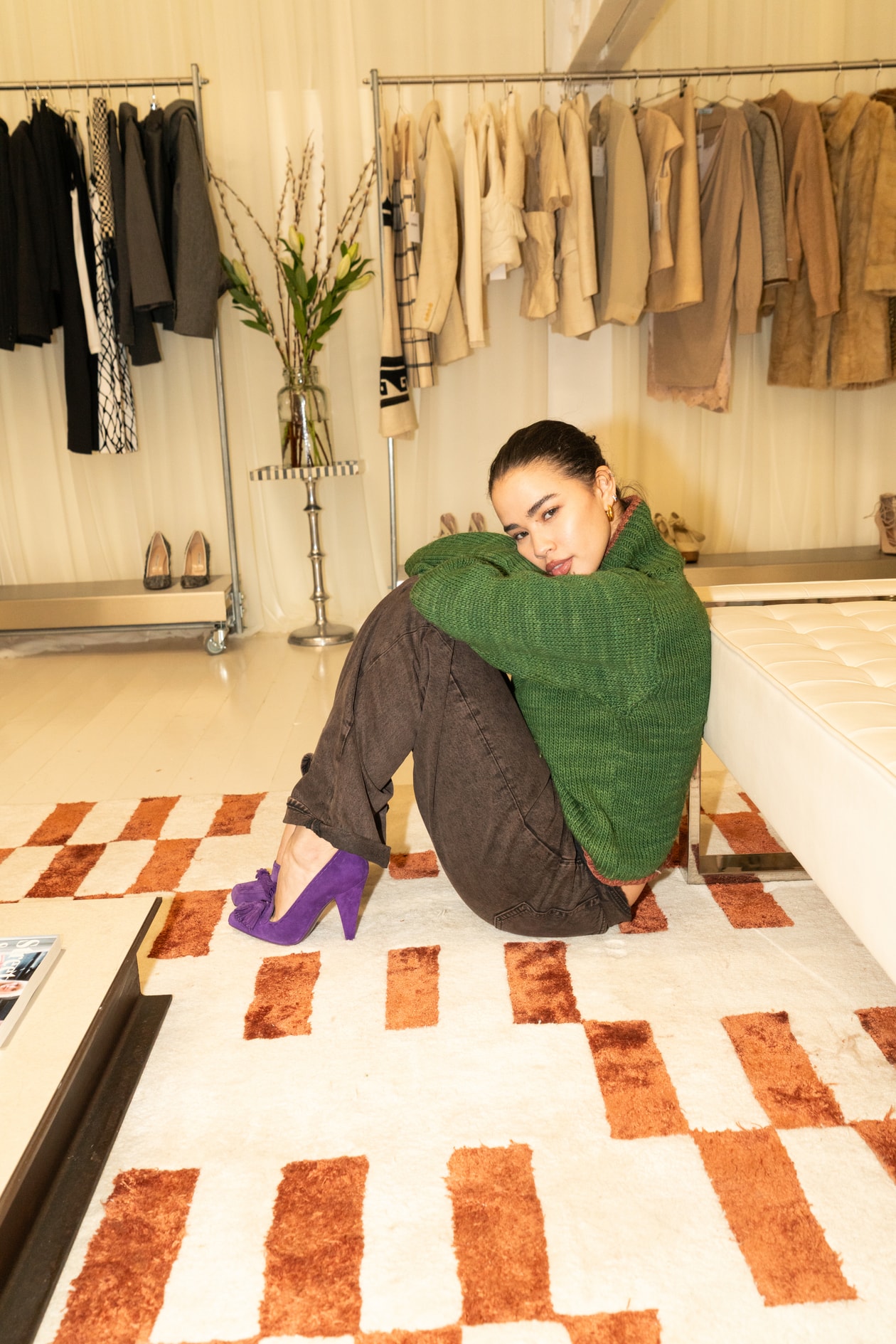
In general, it feels like more people are drawn to shopping in real life and having an actual experience. Is that something that factored into opening a physical space for Koroma and not just being a website?
That was definitely a thought for me, having it not just be a website, which obviously, when you’re starting something, does make more sense. But I personally think when you’re shopping vintage specifically, you don’t get the feel for the piece fully unless you see it in person in the same way.
I liked the idea of someone having a personal experience; they can book in and have the whole space to themselves. They can come with their friends, have the music playing, they can try on as many things as they want, and take pics. I just liked the idea of it being a more personalized shopping experience than rushing in and out of a shop, or having a quick look around and not really taking time because it’s so busy, or feeling too awkward to try things on.
Yeah, I know that feeling!
Some of the vintage stores you go into, it feels really tense, and you feel like people are judging you. Or it’s an old man throwing clothes at you, being like, “Try this!” So I kind of just wanted it to feel like a girly personal shopping suite, a vintage personal shopping experience.
Love the sound of that. I actually came here for the Julia Hobbs’ sale, so do you have more plans to do events and takeovers for people to sell things?
I actually had the idea to have a group of people come in, and each person can have their own rail. I’d love to have a breakfast, something similar to the Vogue vintage sale that happened the other day, just using it as a space where people can come in, working with eBay, working with Vestiaire, and hosting little girly events. The clothes can still be out, but for example, one of my best friends makes handmade journals, and she was like, “We could do a workshop!”
I want it to be a nice space where people can feel comfortable. We’re so quick to be like “girls” because it’s women’s clothing, but obviously, anyone can. We’ve styled a couple of boys from the stuff we have on the rails and my boyfriend steals all the clothes, so does my brother. But I like the idea of it being a nice space where people can host events, a coffee morning, a wine night in here.
View this post on Instagram
That sounds very cute. Off the back of that, how do you see the space evolving in the future?
I want it to continue to be somewhere where people can come and rent looks. I want it to also be a nice community space—having it just be easy and somewhere fun to hang out. And also for normal people that want to shop, for other stylists to come in and people that need to rent looks.
I like the idea of it being a fashion space that isn’t intimidating. I think there are so many places that, when you’re looking for high-end clothes, even a lot of the vintage shops I shop at, you come in, and you feel intimidated, or people are being like, “Do you know what that is?” And it’s like, no, let them have fun, let them try the clothes on and enjoy. I think [Koroma] is an unintimidating shopping experience.