





TTSWTRS Takes Us Down the Rabbit Hole and Into Fashion's Next Dimension
Founder Anna Osmiekhina discusses the brand’s surreal new universe, AI-driven creativity and imagining a different future for the planet.
Since founding TTSWTRS in Kyiv, Ukraine, in 2013, Anna Osmiekhina has been exploring the body as a canvas for self-expression. What began as an experiment in tattoo-inspired clothing has evolved into a fashion universe that blurs the boundaries between skin, identity and art, with each collection carrying a deeper story.
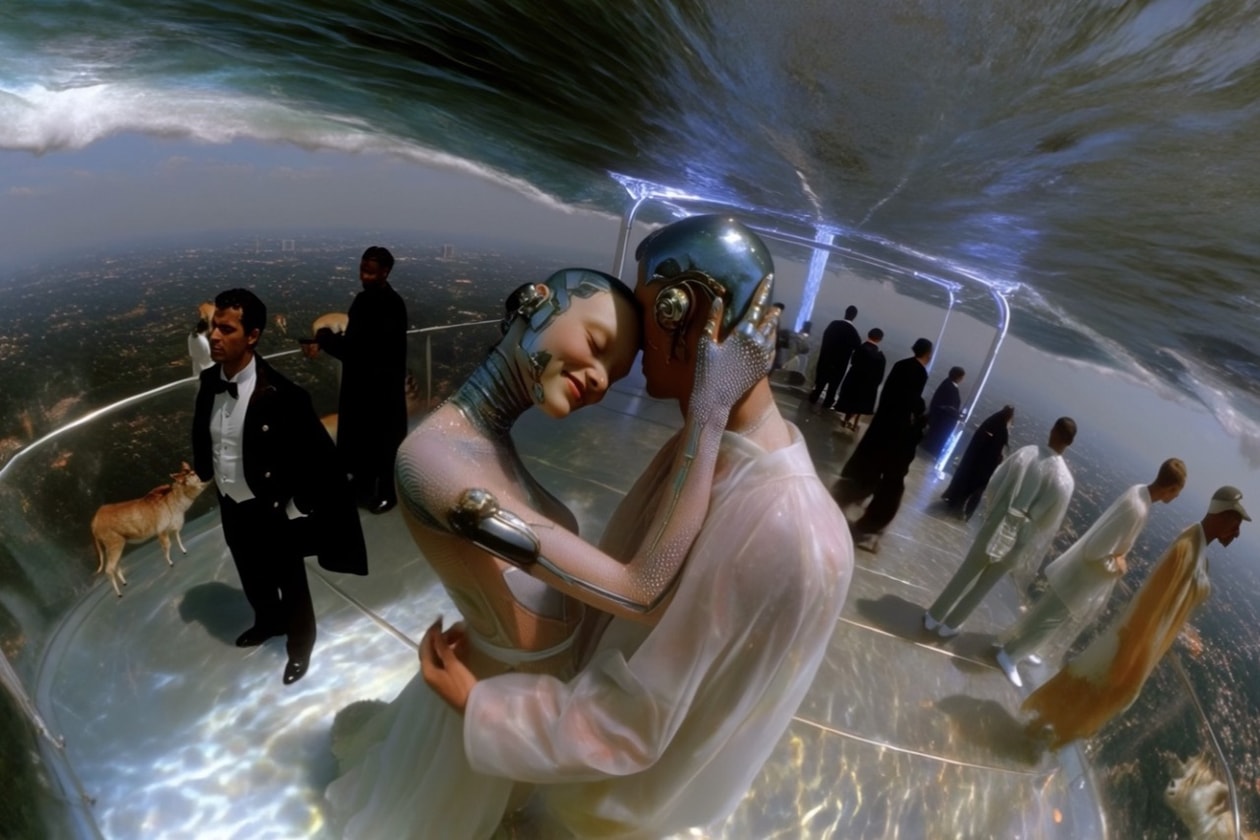
For Spring/Summer 2027, the designer took that vision somewhere new, returning to New York Fashion Week with an immersive interpretation of “Wonderland.” Part fashion presentation, part digital journey, the experience invited guests to go down the rabbit hole through an AI-generated film and virtual reality, exploring two possible futures: one defined by overconsumption and disconnection, the other by a renewed relationship with nature.
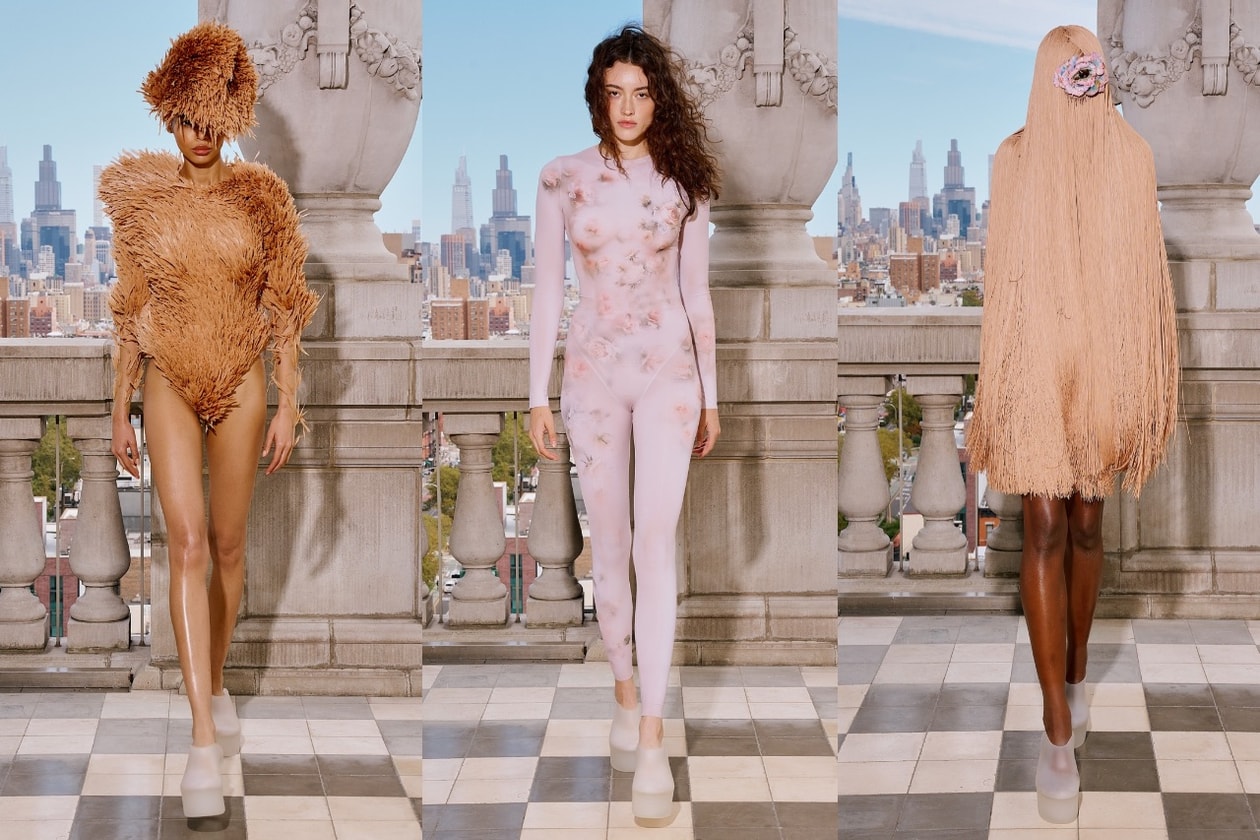
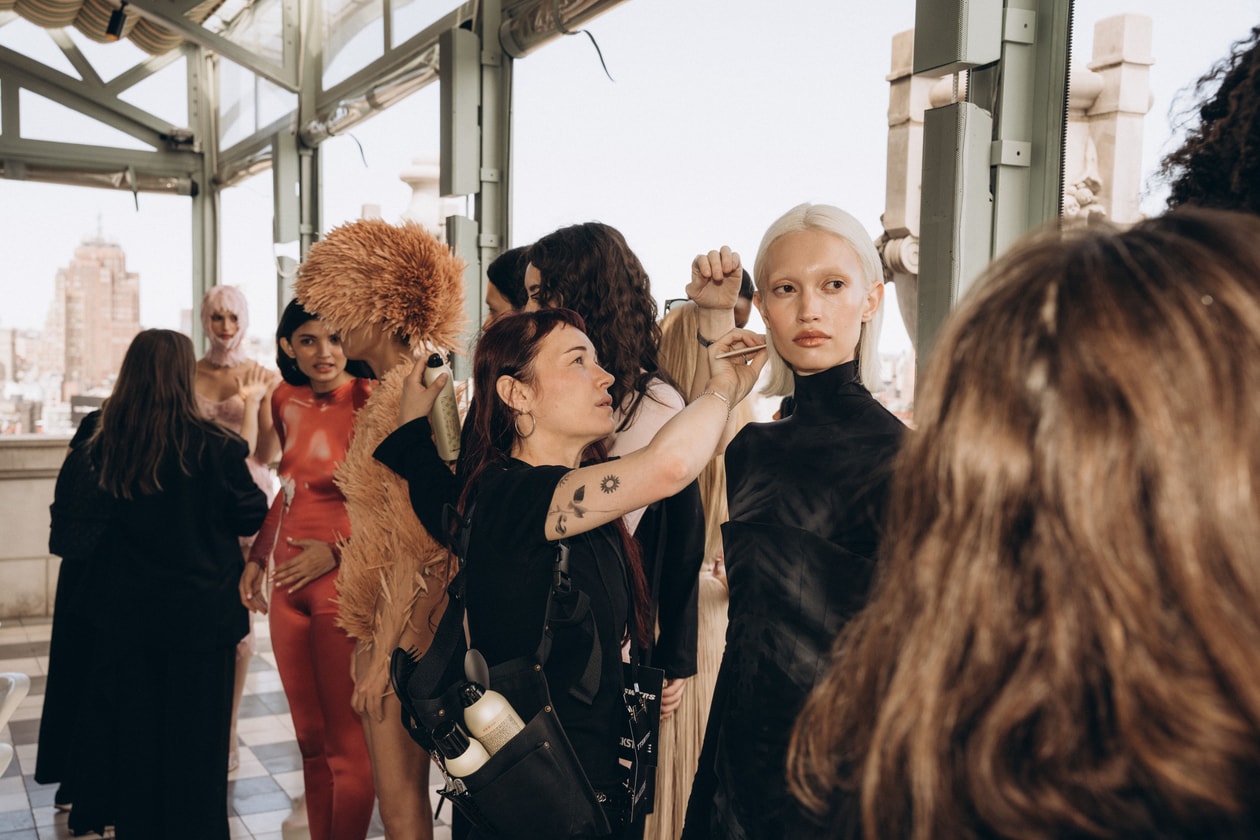
Across the collection, petals, feather-like organza and surreal silhouettes brought this imagined world into reality, transforming models into its otherworldly inhabitants. But beneath the fantasy was a more grounded message about the world we inhabit and the choices we make.
Speaking to Hypebae, Osmiekhina discusses the ideas behind “Wonderland,” fashion’s evolving relationship with technology and why, more than a decade on, the body remains at the heart of TTSWTRS. Read on for the full interview.
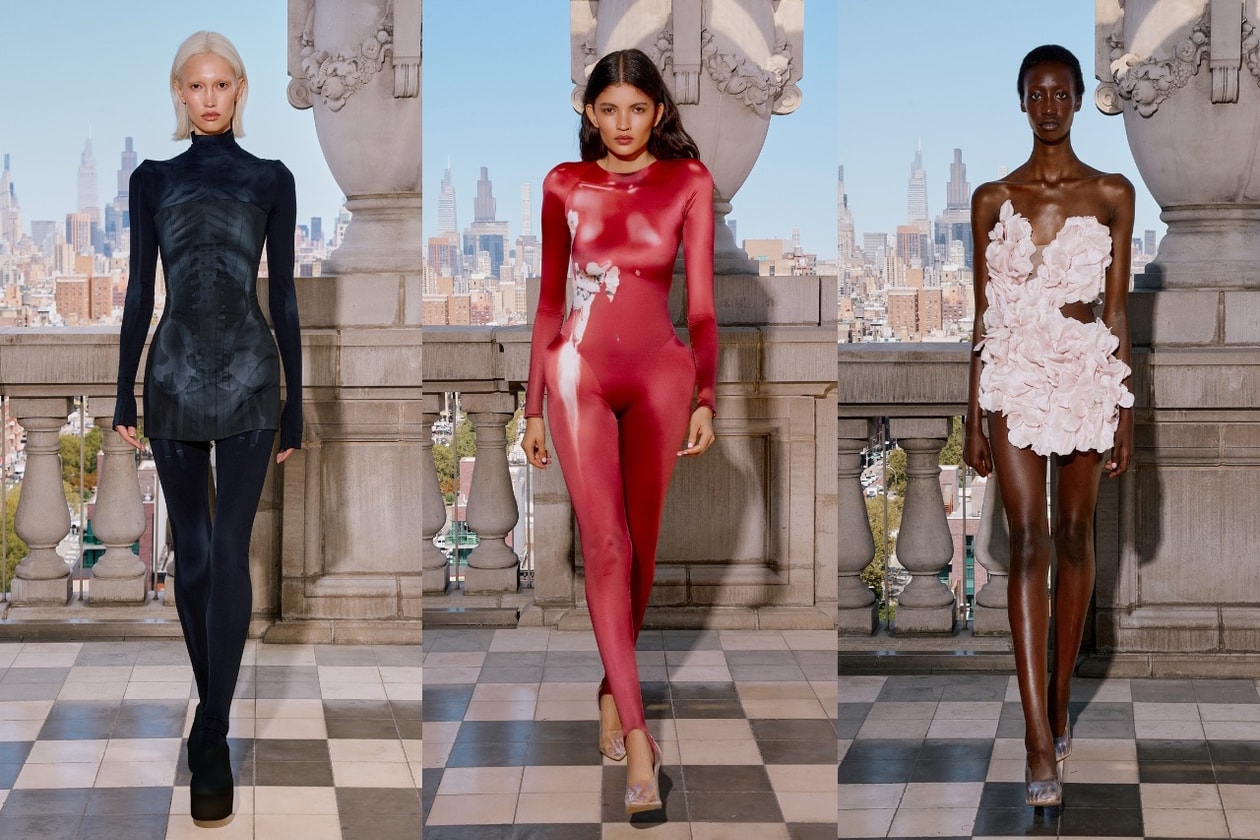
TTSWTRS began with the idea of treating the body as a canvas for self-expression. Has your understanding of the relationship between fashion, identity and the body changed since founding the brand in 2013?
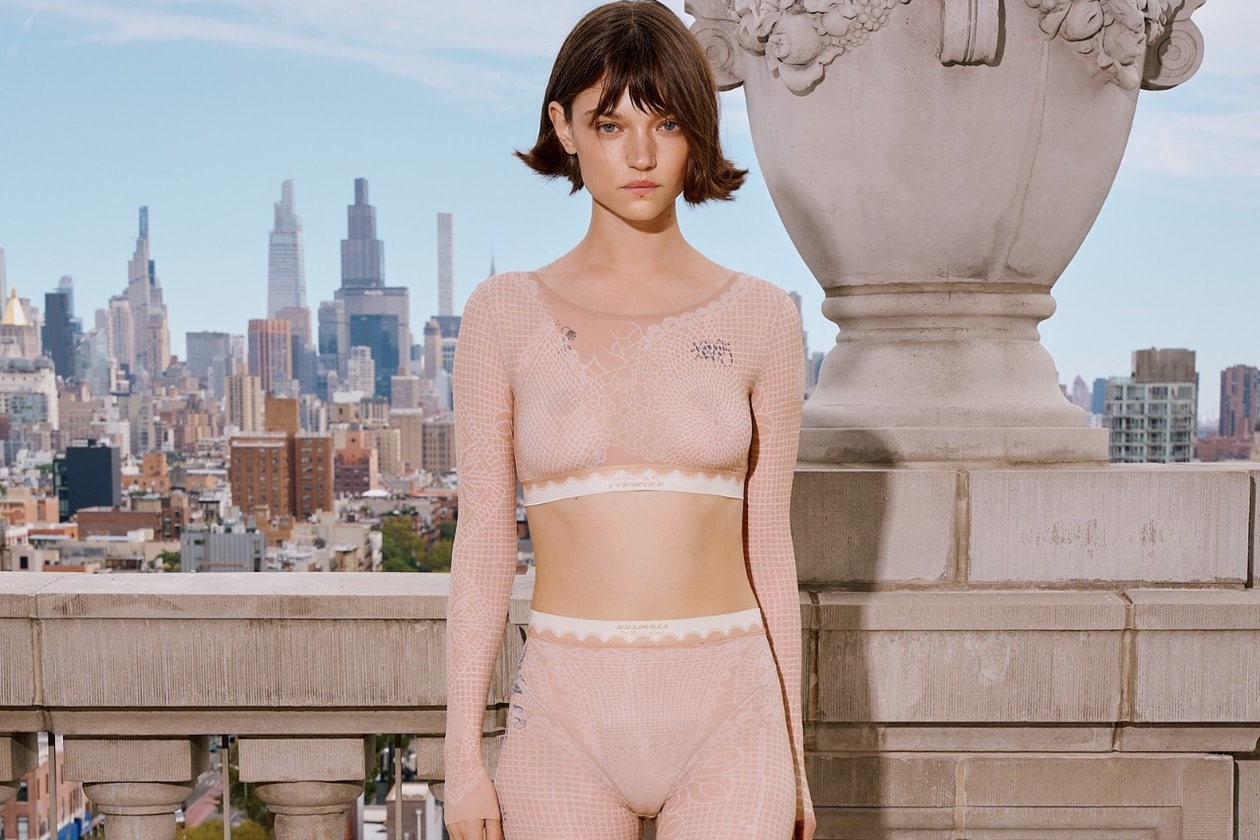
The core idea has always been there, but our understanding of it has become much deeper. TTSWTRS began with tattoo culture and the idea of creating an optical illusion of tattooed skin, blurring the line between fabric and the body. I was fascinated by the intimacy of tattoos, by the freedom of choosing something to put on your body and carry with you forever. Every tattoo has a story behind it. It’s a very personal decision, almost a ritual.
Over time, we started looking at the body itself as something much bigger. For me, your body is your most powerful uniform, your avatar for life. It’s how you exist in this dimension. We don’t give it enough respect. I’ve also seen how much clothing can change the way someone feels about themselves. I’ve witnessed it thousands of times in dressing rooms as a stylist and costume designer. Someone puts on a certain outfit, and suddenly they become a different version of themselves. More confident. More magnetic. They allow themselves to be louder, bolder, more visible. That’s the feeling we’ve always wanted to create through TTSWTRS.
Our philosophy has evolved from exploring the visual relationship between clothing and skin to a much deeper exploration of identity, self-acceptance and the freedom to express yourself. But the body remains our starting point.
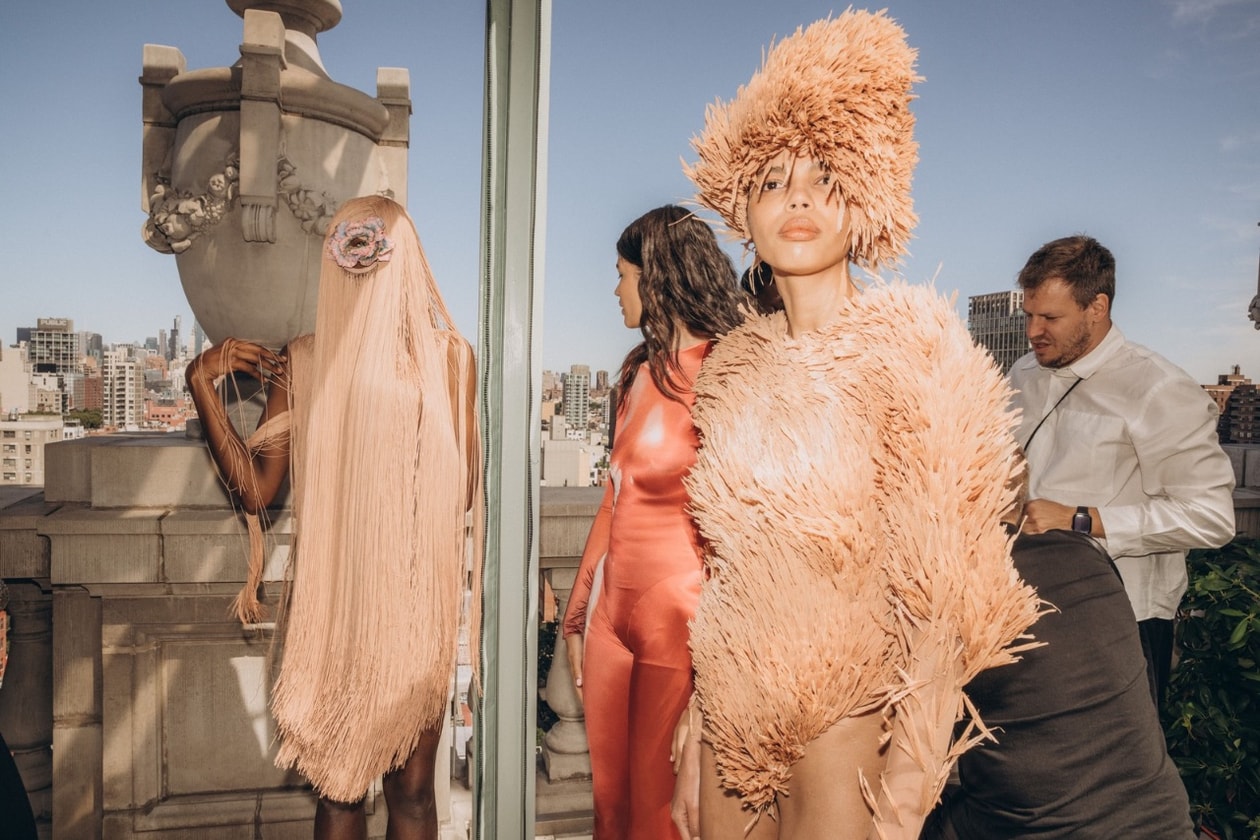
For SS27, you created an immersive “Wonderland.” Where did the initial idea for this universe come from, and what did you want people to take away from experiencing it?
Wonderland has always been somewhere in the DNA of TTSWTRS. Even at our factory, my office is named “Wonderland,” and the fitting room is called “Rabbit Hole.” Alice in Wonderland has been one of my favorite books since childhood, but my understanding of it has changed over time. As a child, you’re drawn into this magical world. As an adult, you start seeing something much deeper in it. I’ve always found a connection between the book and Dao/Taoist philosophy: the idea that there is no single objective reality, that you shouldn’t limit yourself by what you think is possible or impossible. You let life flow and understand that you can create your own reality.
And despite everything happening in the world around us, we wanted to build a reality where we feel comfortable. A world we would actually want to live in.
The clothes were an important part of bringing “Wonderland” into the physical world. We wanted every look to feel as if it belonged to this universe, as though the models were characters who had stepped out of the film. We played with familiar shapes and unexpected details, creating looks that felt a little surreal, somewhere between reality and fantasy.
But there was another layer to it. In our VR film, we explored two possible directions. One leads down the rabbit hole of phone addiction, disconnection from each other and the destruction of our planet. The other is a conscious choice to live in harmony with life, nature and the world around us.
We have this incredible planet. The sky, the oceans, the flowers. All these things are already here, and we cannot take them for granted. Sometimes we need to stop and look around. That’s what I wanted people to take away from the experience. Fashion is a very demanding industry. You’re constantly moving, producing, reacting, adjusting to what comes next. There’s very little space to stop and reflect. I wanted to create an experience that could take people out of that cycle, even for a few minutes, and make them feel something.
I was genuinely touched by the reactions. One of the guests actually cried after watching the film. She told us how deeply it had affected her. We didn’t expect that. We thought people would enjoy the location, the music, the food, see their friends and have a good time. But people really sat down, put on the headsets and immersed themselves in the story. That was incredibly rewarding.
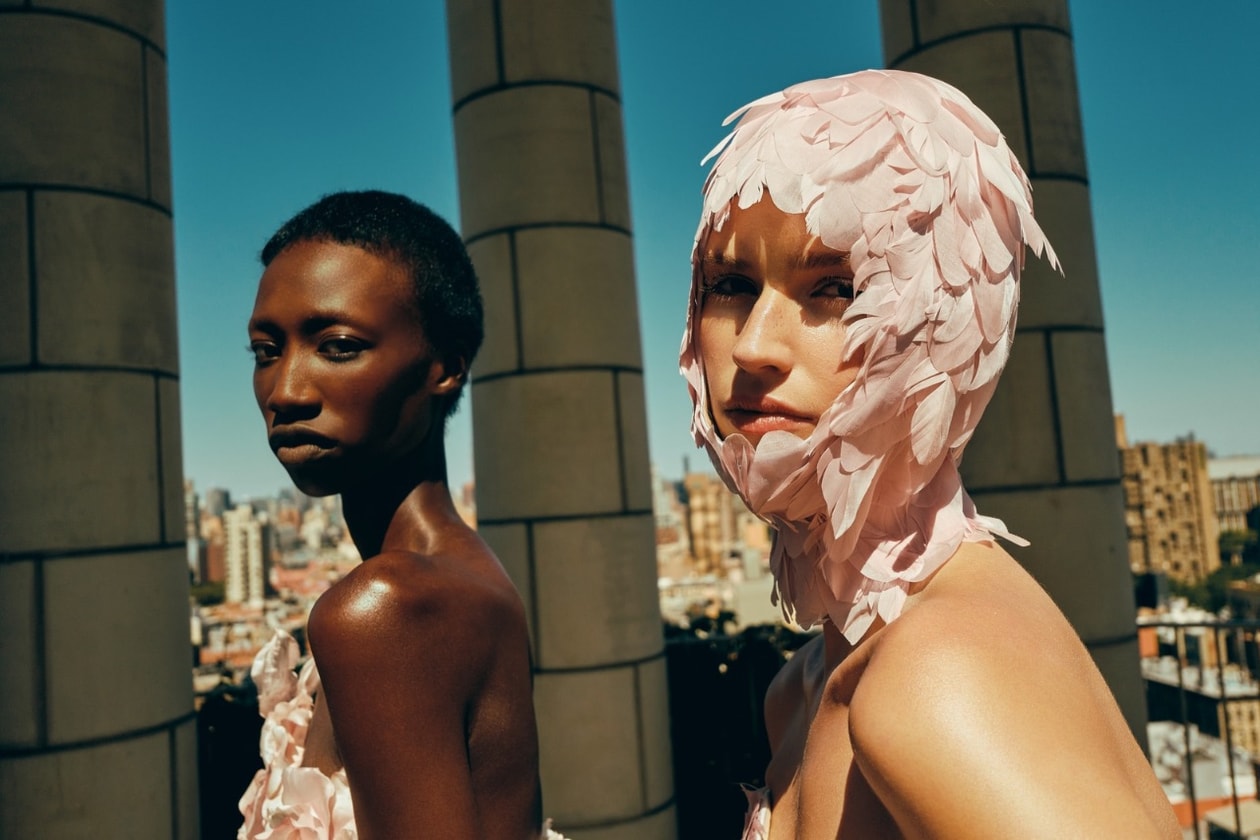
Flowers, animals and other elements of the natural world appear throughout the collection. What fascinated you about exploring the relationship between nature, fantasy and the human body this season?
What fascinated me this season was the idea that we’re not separate from nature. We’re part of it. Our bodies, just like the natural world around us, are constantly changing and transforming. I wanted to play with this connection and see what could happen when the two become almost indistinguishable.
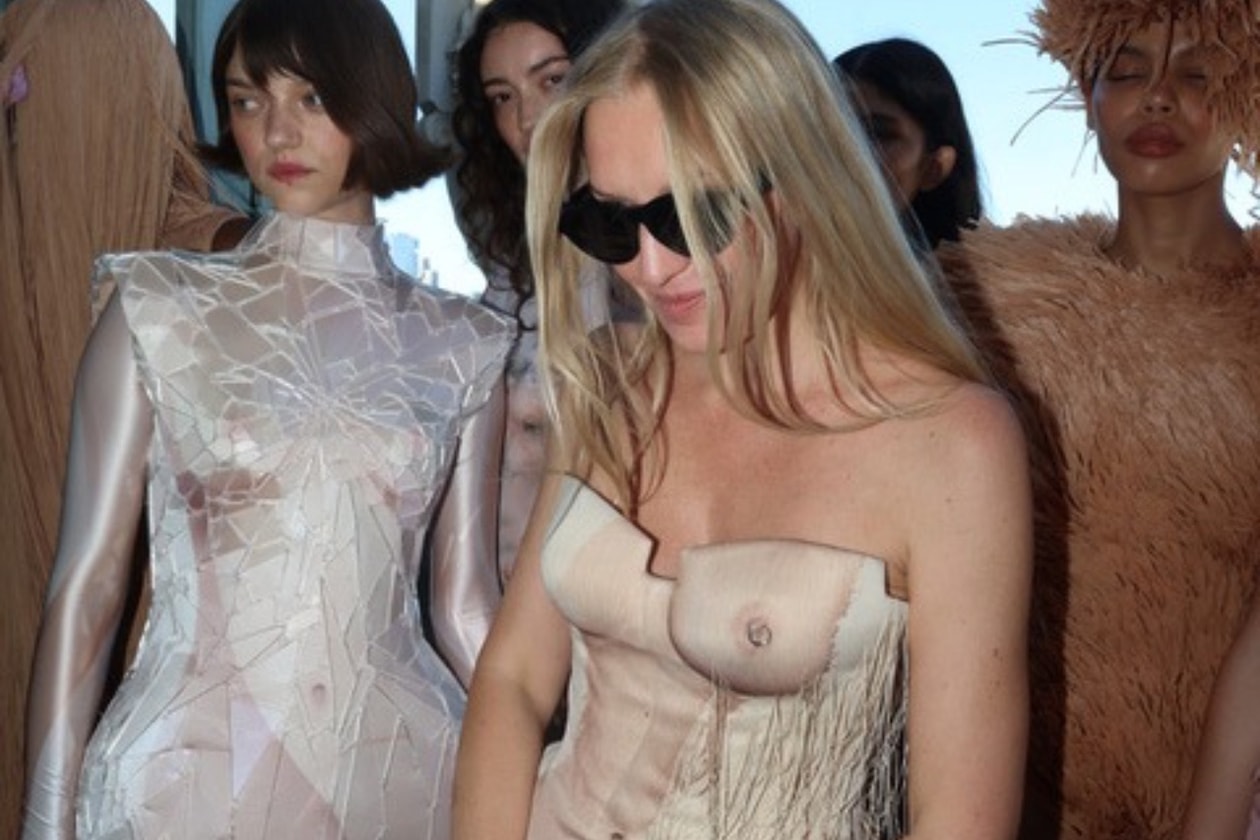
You can see this in the looks we created for the presentation. We made a dress from around 350 individual silk petals, making it look as though roses were growing directly across the body. We also brought one of “Wonderland’s” creatures into the physical world, using hundreds of individually crafted organza feathers to create a soft, voluminous silhouette inspired by a flamingo. I loved the idea of taking familiar elements from nature and transforming them into something unexpected, almost as if the human body itself could become part of this imaginary landscape.
But for me, this connection goes beyond the visual. We often forget how deeply our lives depend on the natural world. We take so much from it without always thinking about our place within it. I wanted to create a world that reminds us of this relationship and makes us look at it differently.
Fantasy gave us the freedom to explore this idea without limits. We wanted the models to feel as if they had stepped straight out of Wonderland, and the audience to feel immersed in that world rather than simply watching it. For me, that’s the beauty of fantasy: it allows us to imagine something that doesn’t exist, but can still change the way we see what does.
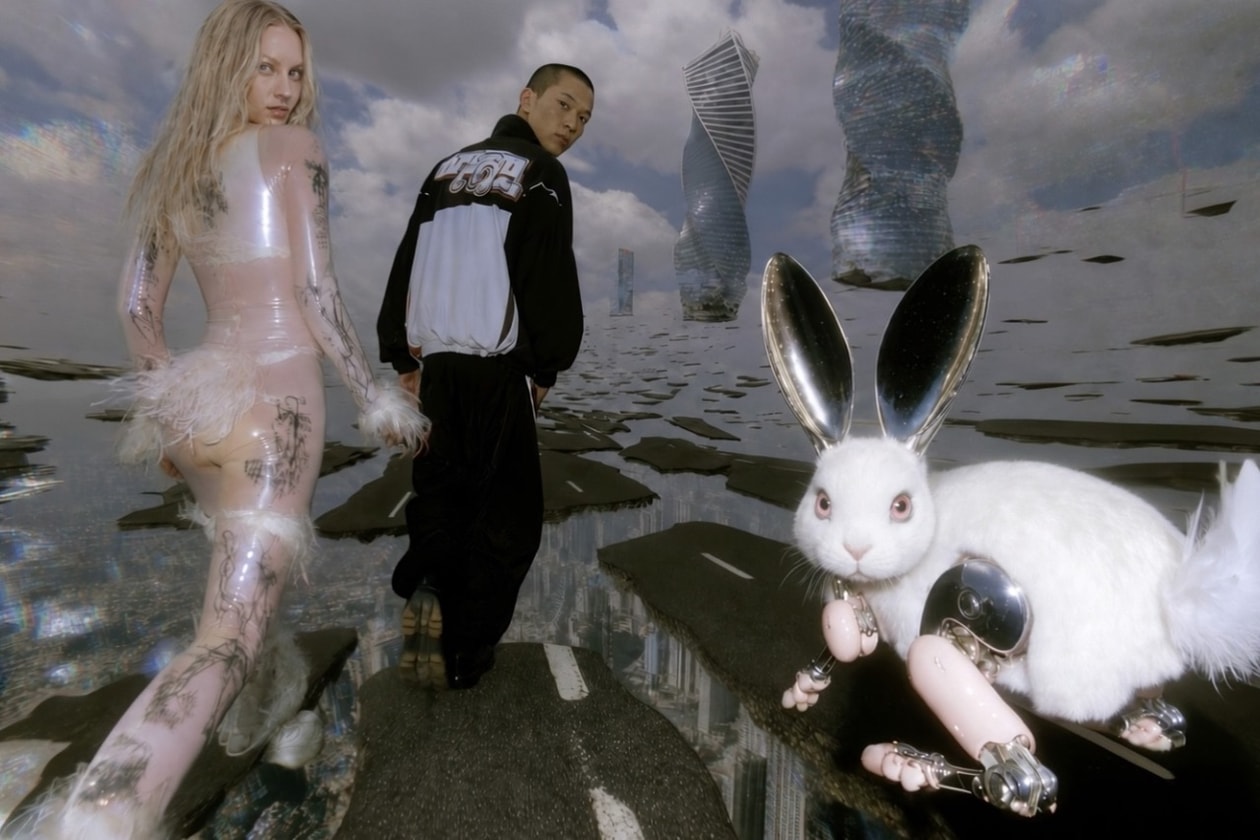
The presentation invited guests to step into the collection through virtual reality headsets. How important is it for you to experiment with new technologies?
I believe that rejecting technology is like fighting against time. We cannot stop its development, and technology is incredibly important for the future of TTSWTRS. We are already exploring fashion-tech, and I’m interested in seeing how far we can take this direction creatively.
At the same time, we have to find a balance. Technological development should happen within limits that our planet can sustain. Technology itself isn’t the enemy. The question is how we use it and whether we can make its development more environmentally conscious.
Our collaboration with Katsukokoiso.ai was a great example of how technology can open up new creative possibilities. I’ve been following Eugenio’s work for a long time, and I knew he was the right person to bring this vision to life. His ability to create surreal worlds and characters was exactly what I was looking for. I honestly can’t imagine making this film with anyone else.
VR was the perfect tool to take the experience one step further. Instead of simply showing people a visual concept, we could invite them inside this world and let them experience it for themselves. I wanted to tell a story in a way that would be impossible through a traditional fashion presentation. That’s when technology becomes truly interesting to me: when it gives us new creative possibilities and allows us to create experiences that stay with people, while making us think about the future we are building.
Your work has always played with the idea of illusion, particularly through tattoo-inspired prints that blur the boundaries between clothing and skin. Do you see a connection between this technique and the boundaries of the physical and digital worlds?
The boundary between the physical and digital worlds will eventually become much less defined. In some ways, we’re already approaching that point. Sometimes it’s becoming difficult to tell what’s real and what’s digitally created.
This connects to what we’ve always explored at TTSWTRS: the idea of illusion and the possibility of transforming how we present ourselves. Our tattoo-inspired designs play with the boundary between clothing and skin. Digital technology takes this idea somewhere further.
Imagine being able to give your digital avatar any tattoo you want, change its appearance and style it exactly as you envision yourself. You become your own stylist and art director, treating your avatar as a creative project. Digital reality will open up an entirely new space for self-expression.
Body acceptance and individuality have always been central to TTSWTRS. How do you think fashion’s relationship with the body has evolved over the past decade?
I feel we’re gradually becoming more conscious of how we see and treat our bodies. At least, I hope we are. As we get older, we start to understand that the body is not something we should constantly fight against. We begin to appreciate it for what it allows us to experience and how much it gives us.
A healthy body, whatever its shape, is beautiful to me. It’s important to move away from prescribing how people should look, age or express themselves. Whether you want to change something about your appearance or embrace it exactly as it is, that’s your personal choice.
Fashion has an important role to play here. I find it much more interesting when clothing creates room for different ways of expressing yourself rather than trying to fit everyone into one idea of beauty. Hopefully, we can move completely beyond simply replacing one beauty ideal with another.
Looking back, how has the brand’s identity evolved since launching, and which original ideas have remained non-negotiable for you?
We didn’t immediately arrive at the body as the central idea of TTSWTRS. In the beginning, we were exploring tattoo culture through streetwear. Our first pieces featured tattoos reproduced in a very specific way — not as ordinary prints, but with the original scale, colors and details intended by the tattoo artists. We even paid attention to how tattoos fade over time and interact with the skin. We wanted to preserve that feeling of something alive.
Over time, this interest grew into a broader exploration of the body as a canvas, not only as a surface for art, but as a way to express identity. Our silhouettes, techniques and aesthetics have changed, and we’ve moved into new creative territories, including couture and technology. But the central idea has remained the same.
What has never been negotiable is that every piece must have a concept behind it, and that concept must be something we genuinely believe in. And once we decide to pursue an idea, we want to bring it to life in the best possible way. It’s never enough to simply make beautiful clothes. There has to be an emotion, a personal story and a reason for creating them. We can change the form, but we cannot lose the meaning.
Returning to New York Fashion Week with such an ambitious presentation feels like a significant moment. What does showing in New York mean to you, and how does the city influence the TTSWTRS universe?
New York feels very close to me. I feel at home there, and I love its energy. It’s a city that moves incredibly fast, with so many possibilities and so much happening all the time. There’s something in New York’s character that feels very close to TTSWTRS, its openness, its pace, its constant movement and its room for experimentation.
On a personal level, I would really love to live and continue developing my work here. I still have a costume designer in me, and one of my dreams is to open a studio in New York where I could create custom looks. Showing our work there is not just about presenting something during Fashion Week. It’s also about being in a city where I can imagine new possibilities for myself and for TTSWTRS.
As TTSWTRS continues to expand into new creative territories, what are some ideas or mediums you’ve been wanting to explore but haven’t had the opportunity to yet?
I would love to expand TTSWTRS into absolutely everything. I don’t see the brand as something that has to be limited to fashion or clothing. For me, it’s about building a whole universe that can take many different forms.
Some directions are quite obvious, like footwear. But I also want to explore cosmetics, fragrance, tableware and objects for the home, like vases, sculptures and decorative pieces. Things that become part of people’s everyday lives and allow them to experience the TTSWTRS universe in different ways. I’m also interested in exploring new technologies and innovative materials, finding new ways to bring our ideas to life. We already have caffeinated drinks and coffee capsules, and that’s just one example of how the brand can extend beyond clothing.
And I want to think even bigger. I can imagine collaborating with a hotel, a festival or even a city itself. There are so many directions we’ve already thought about, and just as many we haven’t even imagined yet. I don’t want to put a limit on what TTSWTRS can become. If there’s a way to bring our creative vision into something, I’m interested in exploring it.