





The Body Issue: Proportion and Perception
Hypebae’s The Body Issue examines how perception of style still shapes who gets seen as fashionable, and what that means for body inclusivity today.
The way we perceive body representation has changed, but it’s not necessarily for the better. In its infancy, plus-size representation described the increased visibility of bigger bodies in fashion. Now, diverse proportions are celebrated as inventions of artificial shape and largely on thinner frames. These additions — padded hips, broadened shoulders, prosthetic breasts — tend to get attention. A body that already carries that same shape, without the padding or the prosthetic, doesn’t.
We asked our readers what a “fashionable body” looks like today. Their answers say a lot about how far body representation really goes…
96% of our readers believe that the same outfit is perceived differently, depending on the body that wears it. This belief is so intrinsic to us as consumers that, over the years, it’s prompted creators to develop content series questioning, “Is this actually a good outfit or are they just skinny?”
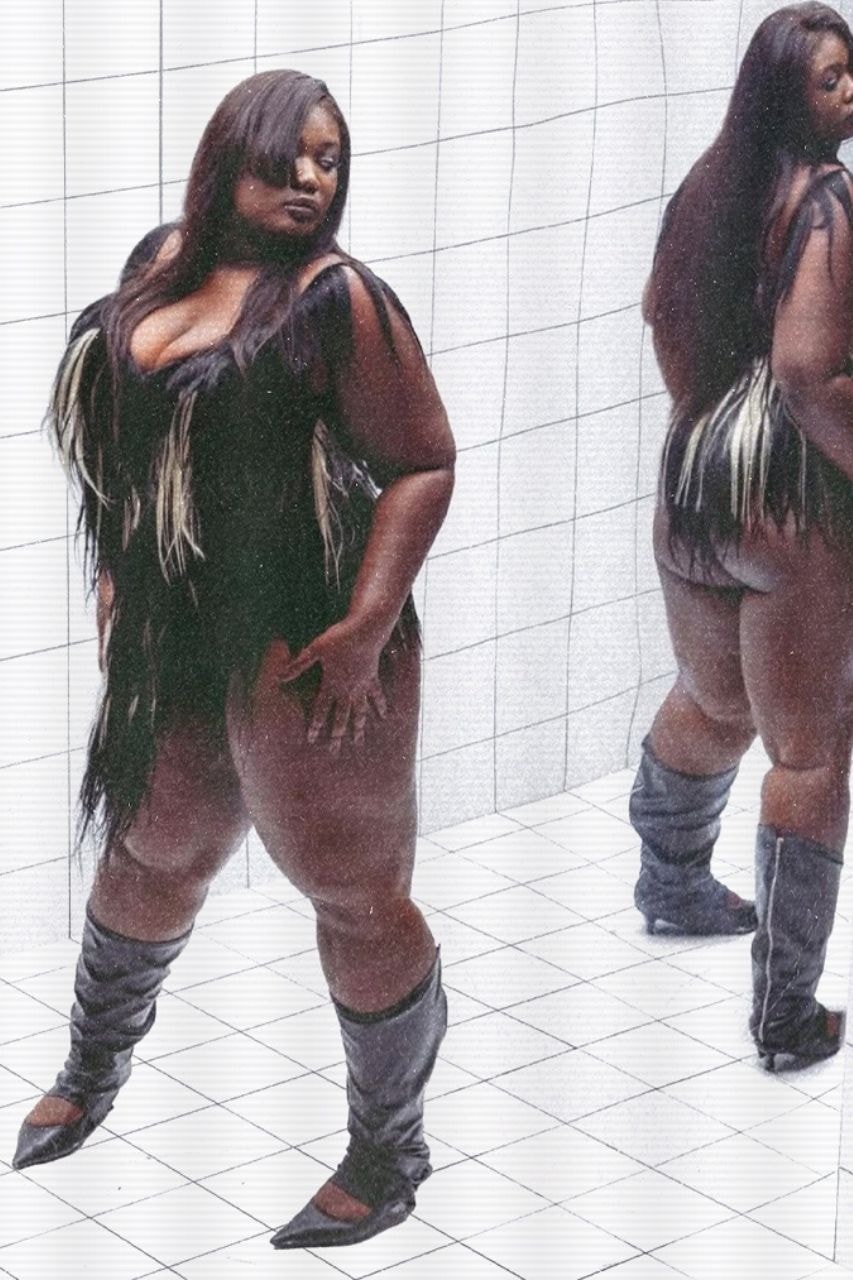
In 2022, editor Aiyana N. Ishmael popularized the format dissecting celebrity style for plus-size-friendliness. This exposed the fact that we often take thinner bodies (and the outfits that adorn them) at face value. Similarly, in 2025, Vitor Arruda posted the first of his “is it a fit or are they just thin?” series, leading a whole host of creators and critics to explore the same concept.
Both series reinforced the fact that, as a society, we often forget to question whether something is actually stylish, because it meets criteria we deem acceptable or good-looking.
At first glance, we see thinner bodies wearing something and perceive it as fashion-forward. The same words do not often come to mind when looking at the same outfit on a bigger body. 67% of our survey respondents say an outfit changes depending on the body wearing it, regardless of the outfit’s style.
Karoline Vitto believes this thinking extends beyond body size into proportion, specifically fuller busts. “There’s an idea that if you have a smaller bust you can go braless and look really cool and chic and fresh,” she tells us, suggesting that the alternative feels quite the opposite. This belief has often been reinforced by the runway, particularly in the ’90s and early 2000s, an era that fashion seems to keep coming back to.
The few times we’ve seen proportions challenged on the runway lean into extremes. Duran Lantink‘s FW25 collection showcase ended when the designer paraded a pair of large, prosthetic breasts down the runway. Anticipating immediate virality, hundreds of editors, influencers and critics shared clips of the polarizing moment. Some praised the addition of a fuller bust on the runway, while others pointed out that it positioned women’s bigger breasts as the butt of a joke, doing little to change perceptions that they’re less chic than their thinner counterparts.
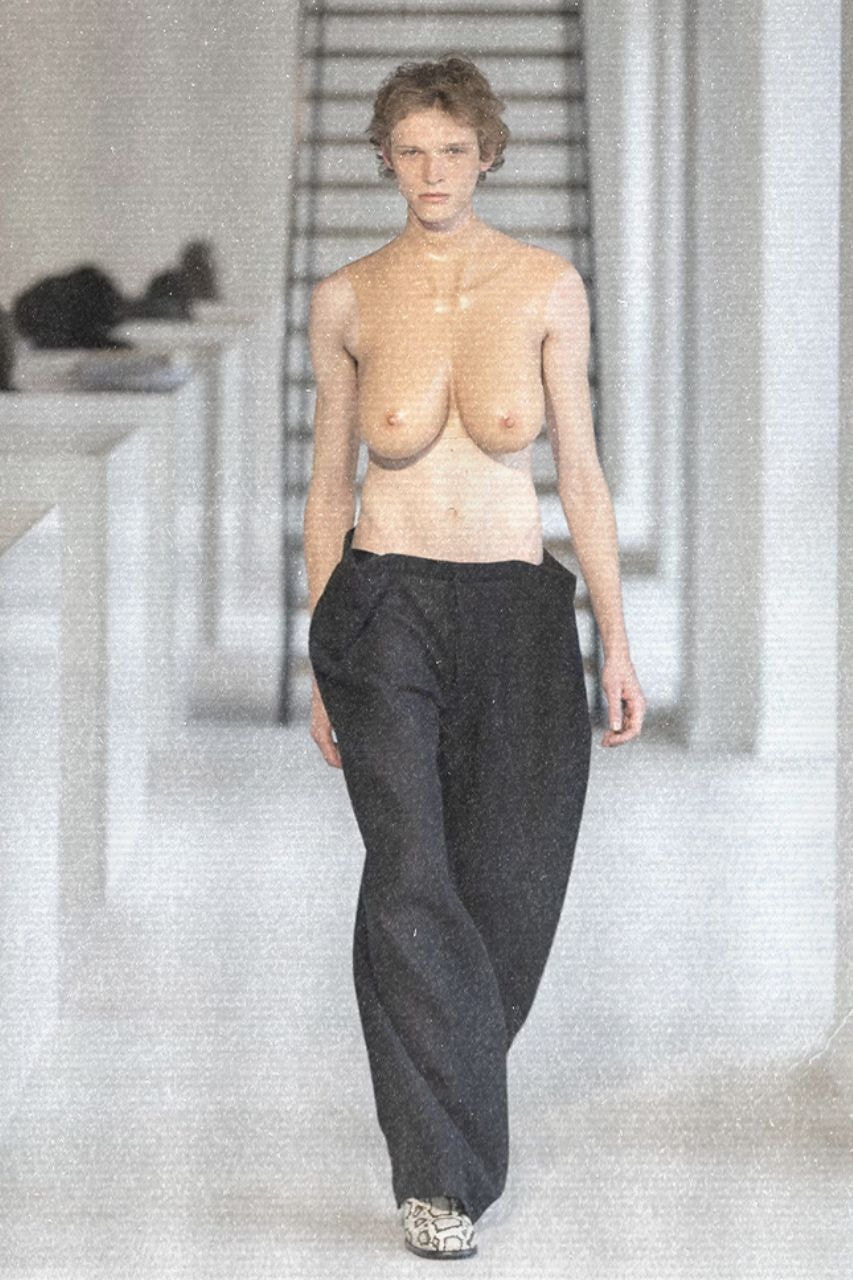
Along with Lantink’s prosthetic breasts, a similar theme emerged around women’s hips, again often seen on the runway as artificial additions to a thinner model’s body and used for dramatic effect. As evidenced by Lantink, Kiko Kostadinov, Alaia and more, these examples reinforce the thought that bigger body parts and bigger bodies are the exception, not the rule, and can only be presented in fashion as unnatural additions, extremes and talking points.
In 2025, Kim Kardashian‘s SKIMS concurrently launched “The Ultimate Hip,” a shapewear item with padded hips, offering its wearer a “mid-level compression solution” that creates a smooth hip-enhancing silhouette. The emphasis stays on manufactured proportions, doing little to include naturally bigger-hipped bodies. Popular conversation treats artificially produced curves as a win for inclusivity, when in reality it’s just a different, harder-to-reach standard.
These emphasized body parts juxtapose the return of ‘heroin chic’ and the rise of GLP-1s, but one thing underpins both: the need for an extreme. The ongoing praise of either results in the erasure of the midsize body and enables body inclusivity to become tokenized.
This sentiment is pretty much proven by the results of Hypebae’s inclusivity survey. In response to the question of what a “fashionable body” looks like today, 71% of our survey responses included the words “toned,” “lean,” and “symmetrical.” Only 1 in 60 Hypebae readers saw full-figured silhouettes as fashion’s current ideal, compared with roughly 1 in 2 who picked “very lean”, across men and women.
So, despite years of progression and pushes for more inclusivity in fashion, our core belief of what’s fashionable still comes down to archaic measures like body fat and definition. Without a healthy or natural point of neutrality, what’s next?
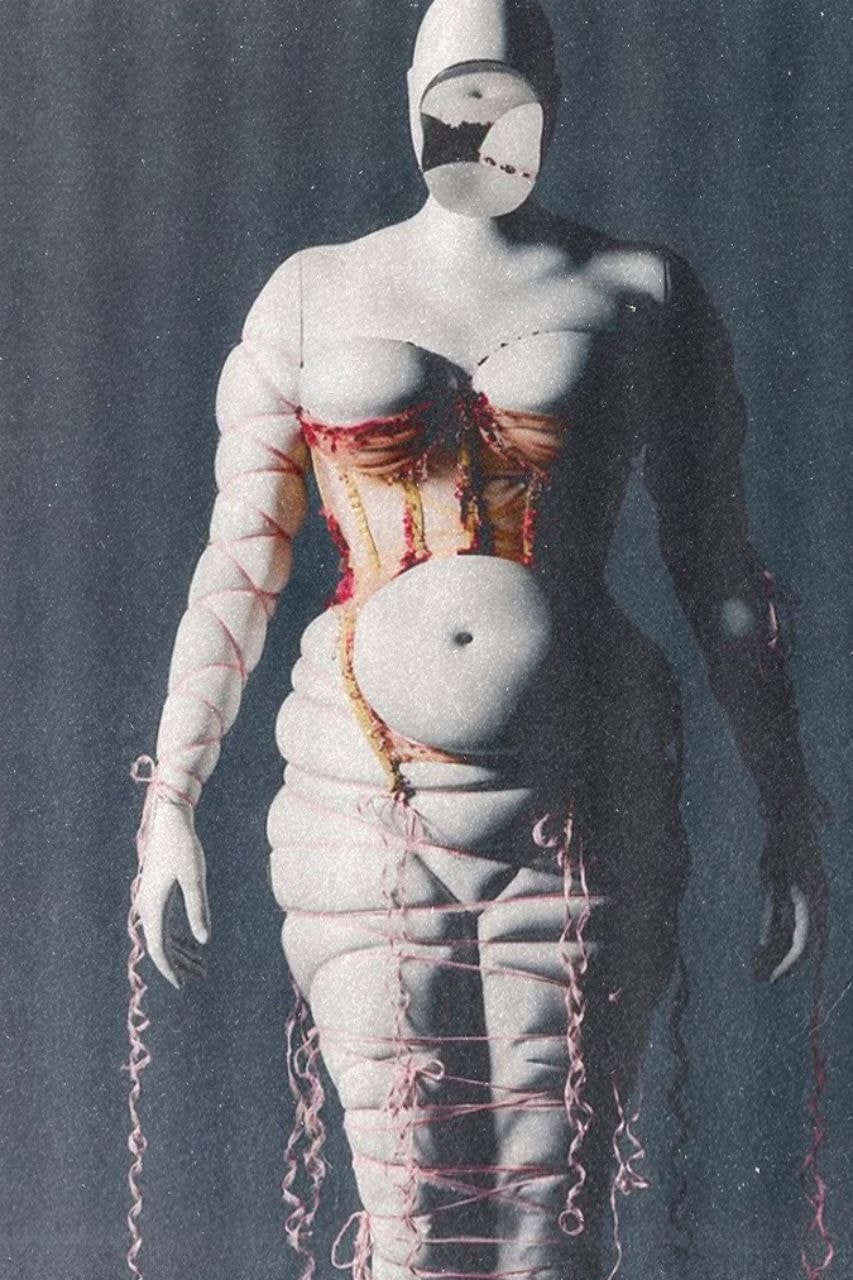
Our hope for the future is that brands continue to explore and evolve their current perceptions of proportion and what is “ideal,” and in a way, we’re getting there. The 2026 Met Gala exhibition featured Andrew Bolton’s size-inclusive mannequins in collaboration with Michaela Stark, an artist who looks at representation through a realistic lens rather than what’s flattering. The exhibition also featured names like Karoline Vitto, Sinead O’Dwyer and Ester Manas, all people who’ve been at the forefront of meaningful change.
If that’s the current state of plus-size perception, then hopefully, rebellion is the next. Going against what’s flattering and fashionable and instead looking for what’s real and what’s actually representative.
Continue reading for more from The Body Issue here.